Electric cooking for 2.1 billion people. Funded by carbon.
PowerUP builds carbon-ready electric cooking for the Global South — sold to distributors and developers, backed by our standalone metering and cloud platform, and proven by a Gold Standard carbon project of our own. Designed and built in Kampala.







The Global South's cooking crisis is the largest unsolved climate and health problem.
2.1 billion people cook with biomass: charcoal, firewood and animal dung. The consequences are enormous and concentrated on the poorest households.
Electric cooking solves four at once — climate, health, time and money. Carbon finance is what makes it affordable.
A measurable climate business. Already at scale.
PowerUP's devices cook without smoke or soot, cut household fuel bills, and save up to two hours a day.
“I sell charcoal for a living — but I cook with the EPC.”
A business model built for scale.
PowerUP is the measurement layer for clean-cooking carbon. We build the hardware, run the dMRV stack that turns its usage into audit-grade data, and prove the whole system on a project of our own.
Carbon-ready cookers, sold B2B.
Rugged, metered electric cookers designed in Kampala, sold to distributors and to the carbon developers who build projects on them — reaching households through pay-as-you-go microcredit and carbon subsidies. This is where most of our revenue comes from today: developers buy PowerUP hardware because it arrives already able to measure itself.
The measurement layer, sold on its own.
Our metering technology and dMRV cloud as a standalone service — live usage data, audit-grade trails, an API — for developers who already have hardware in the field. A young line today, and the one we are building for: as measurement becomes the binding constraint on cooking carbon, the layer that measures it is the layer that scales.
Proof the stack works end to end.
Uganda GS12536 is our own Gold Standard project — the demonstration that runs the full chain, from metered kitchen to issued credit, on our own hardware and data.
Why a household can afford one
Two streams of money meet in the kitchen — and neither works alone.
Down payment + PAYG
Households already buy charcoal in small amounts, several times a week. Pay-as-you-go microcredit matches that rhythm — a small deposit, then payments sized to a budget that already exists.
Carbon financing
Every device meters its own use. That metered usage becomes carbon credits, and the credit revenue brings the price of the device down.
Clean cooking, on a charcoal budget
Neither half works alone. Together they put an electric cooker into kitchens that could never have bought one outright — and keep it cooking long enough to matter.
A platform of connected cooking devices.
Every device is metered and PAYG-ready: a cooker that records the electricity it uses, on board. Add GSM and it reports continuously. Designed in Kampala for the realities of Global South kitchens, grids and supply chains.
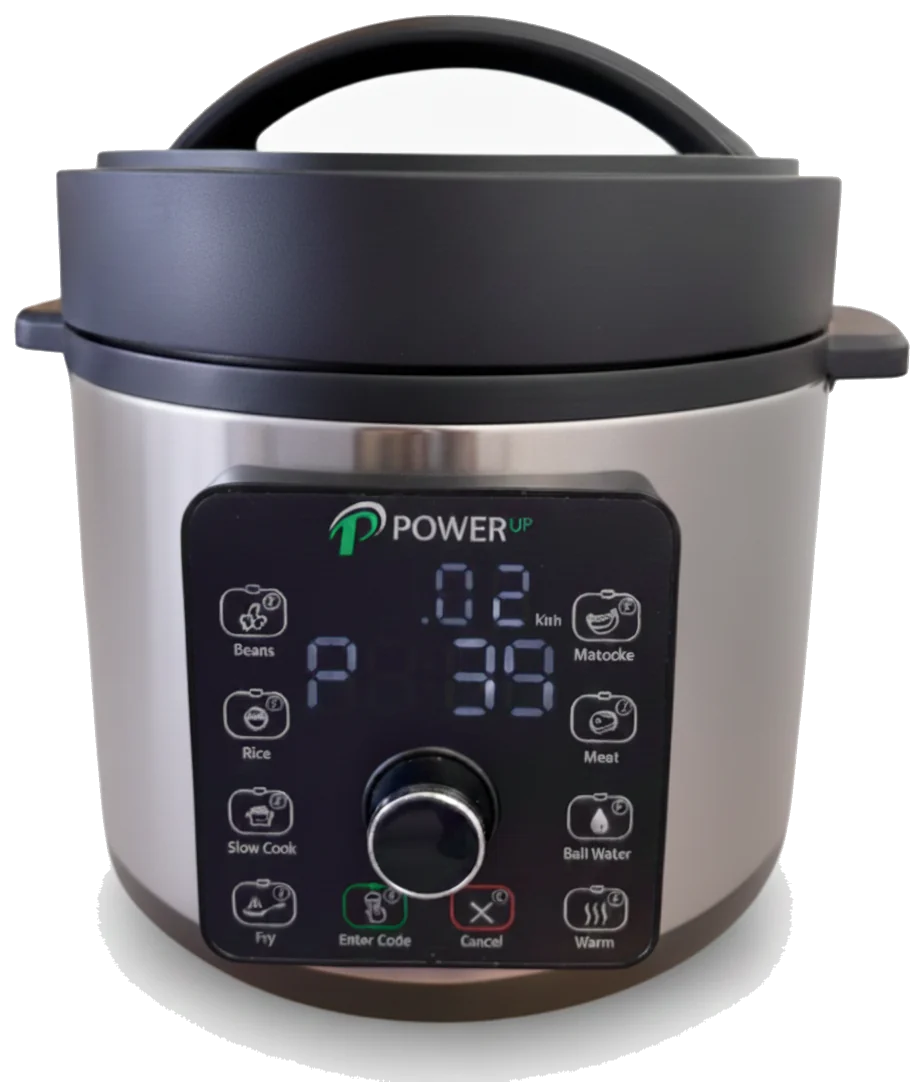
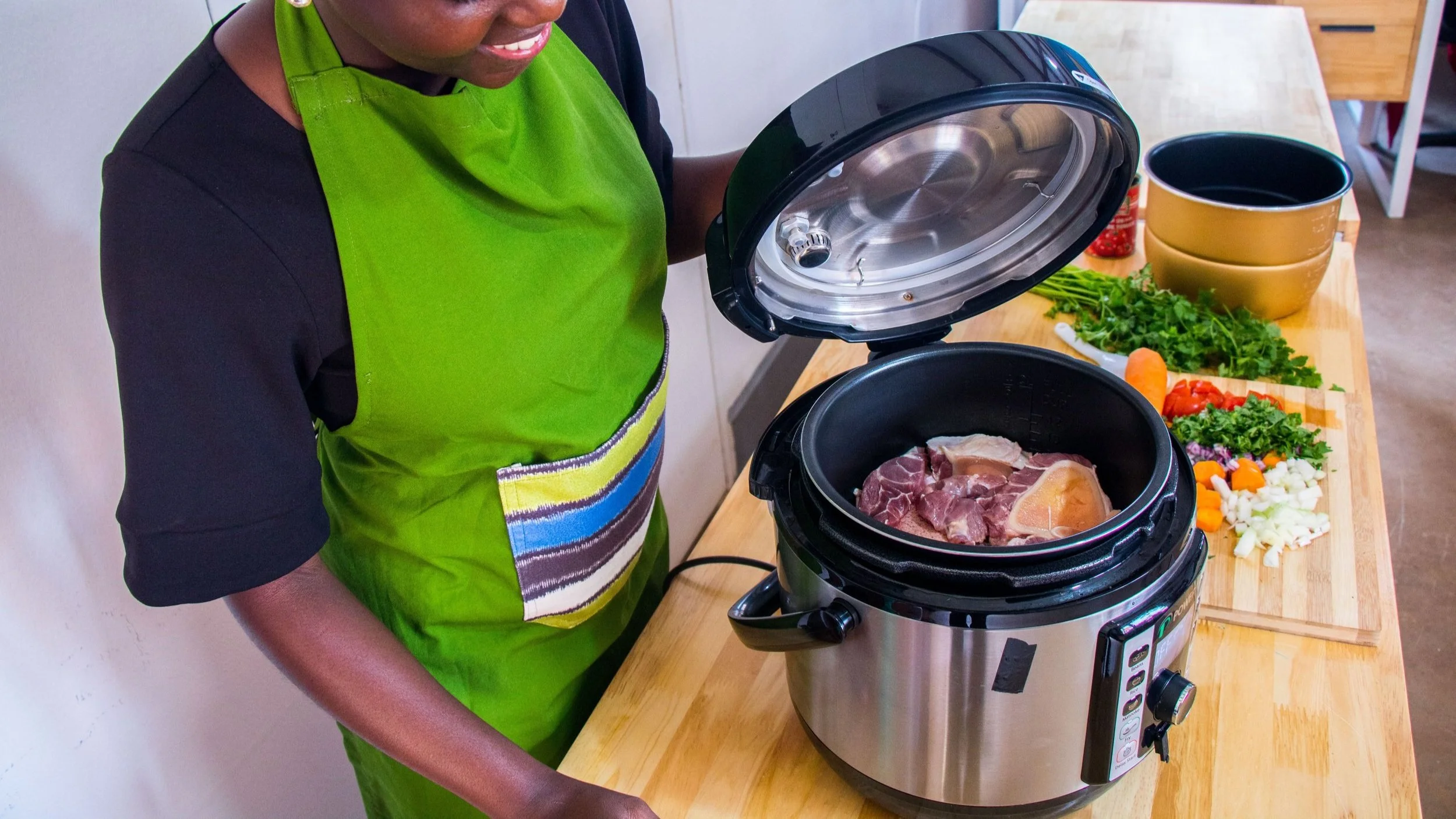
Electric Pressure Cooker
Highest-efficiency electric cooking, localised for staple dishes.
Metered and GSM-ready, with dedicated programmes for local dishes. Cooks beans in 40 minutes without soaking.
“I set the timer, get back to work, and the food is ready in 40 minutes.”
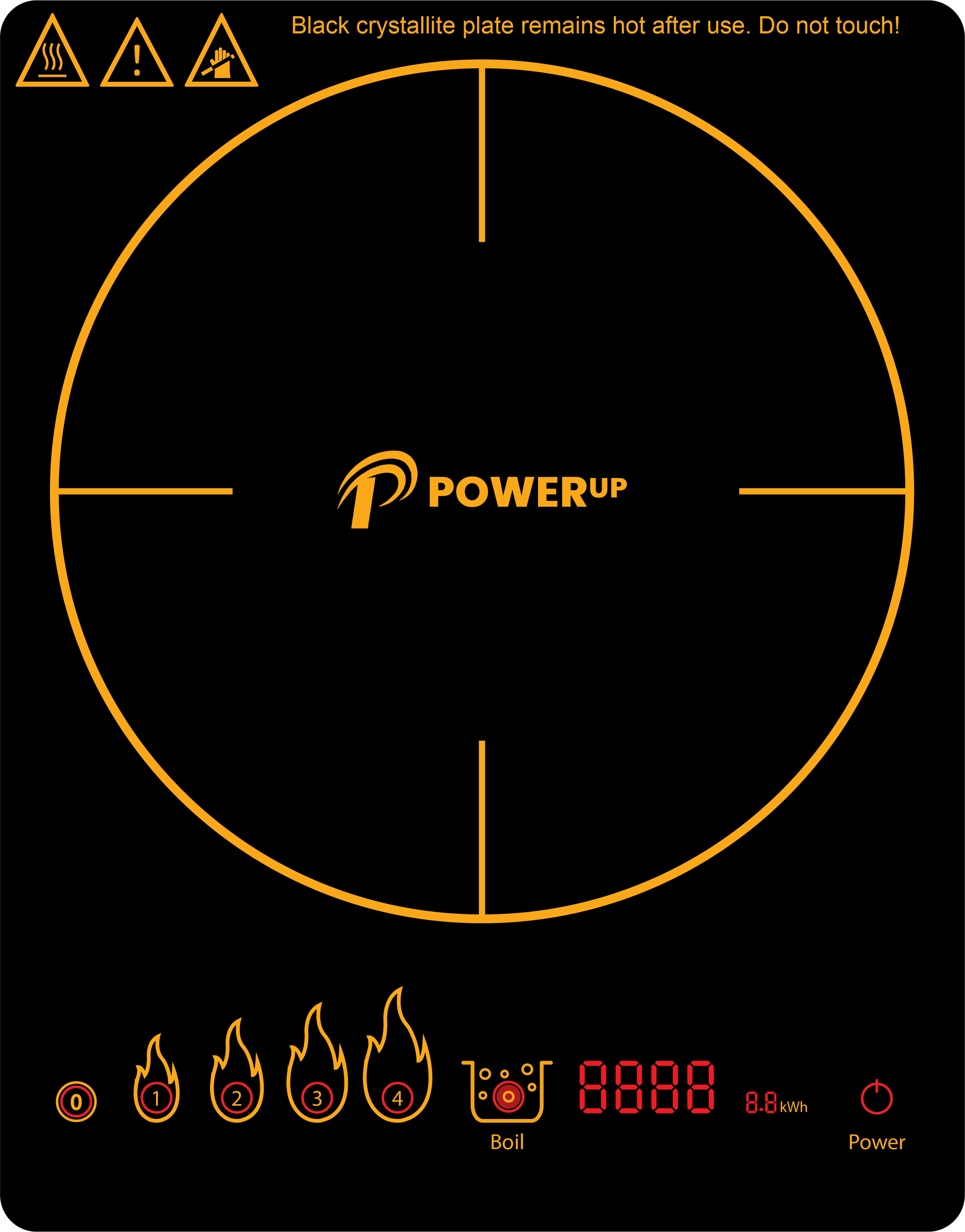
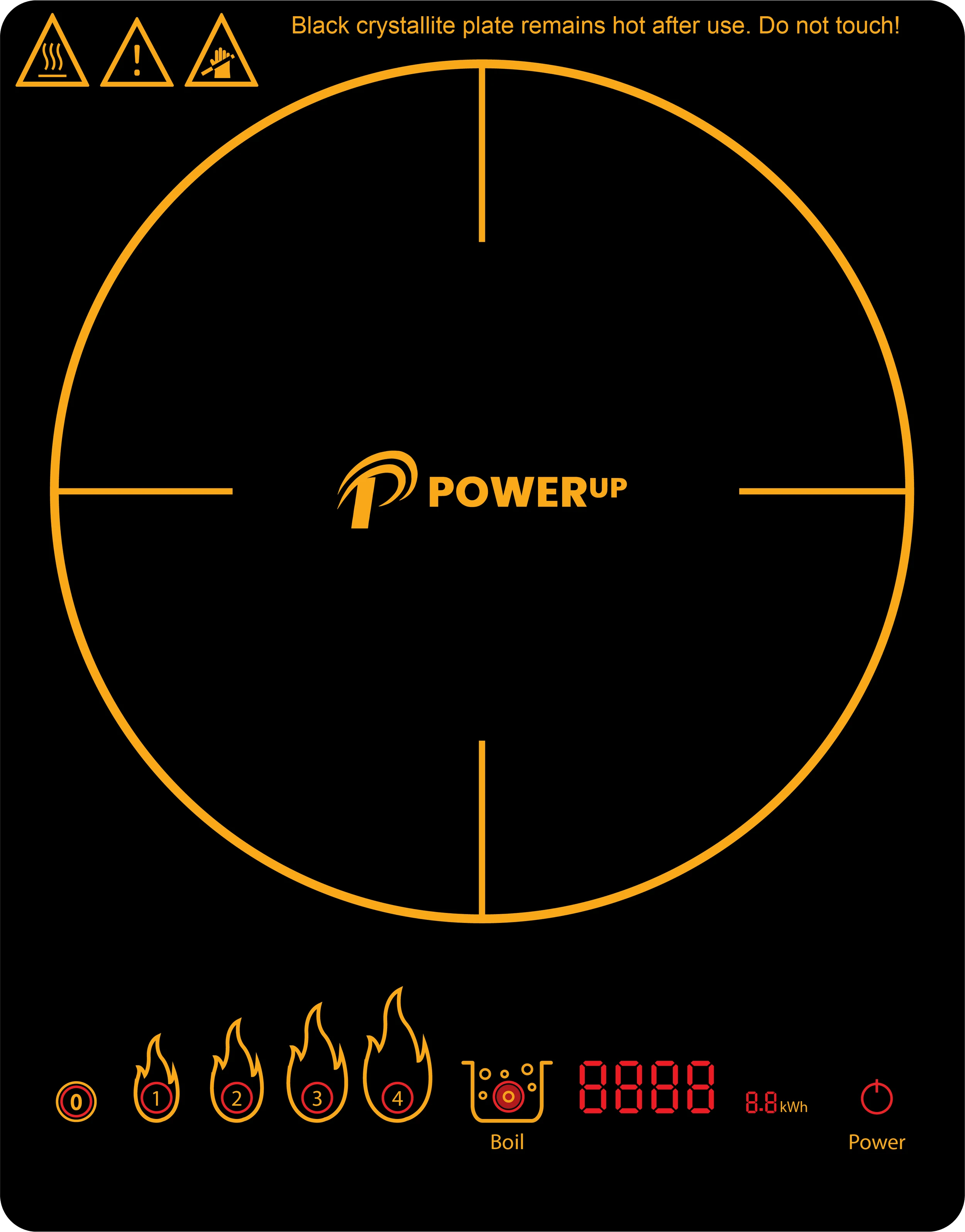
Induction Stove
A simple transition to clean cooking. A 1:1 replacement for charcoal and LPG.
Metered, GSM-ready and PAYG-supported, with four power settings and a boil-water function. No smoke, no soot, no burns.
Electric Cooking Meter
Make any electric cooker a dMRV-ready carbon asset.
Sits inline between the socket and any electric cooker — any brand, any model — and meters it without touching the appliance. A built-in GSM chip streams the data straight to our cloud.
Don't just measure usage. Move it.
Track usage device by device. Assess which kitchens are cooking and which are drifting back to charcoal. Then influence it — while the credit is still there to earn.
Every device meters itself.
On-board metering records the electricity each cooker uses — every device, not a sample. Connected devices report continuously; the rest log locally and are read directly.
Raw kWh becomes a usage picture.
The platform turns meter data into something you can act on: which households cook daily, which are drifting back to charcoal, which cohorts go quiet after the first months.
Then you do something about it.
Reach the households that need reaching — follow-up calls, recipe coaching, PAYG nudges, an agent visit. Not a fleet-wide campaign: the specific kitchens that have gone quiet.
High-integrity carbon credits. Measured, not modelled.
100% of the electricity consumed by devices in PowerUP's carbon project is metered at the device and traceable to the household that used it. No sampling, no assumed adoption rates.1
1 Metering removes the largest uncertainty in cookstove crediting — how much the device is actually used. It does not set the emission factors. fNRB, baseline stove efficiency and fuel stacking are methodology parameters, not measurements. We apply the CDM TOOL33 v03.0 national default for Uganda (39%) — the national value rather than a regional one, because our cohort displaces charcoal in urban and peri-urban kitchens. We net the Ugandan grid emission factor as project emissions, and publish our baseline survey design.
Inside the first authorised Article 6.2 e-cooking activity.
Our electric pressure cookers are named in the Mitigation Activity Design Document for Building Pathways to Electric Cooking (BPTEC) in Ghana, published by Ghana's EPA Carbon Markets Office. Ghana and Switzerland signed Letters of Authorisation in December 2025; ITMOs are contracted to the KliK Foundation and part-financed by the World Bank's USD 200m Clean Cooking Outcome Bond.
Uganda GS12536 — Gold Standard Certified Design.
Our own domestic Gold Standard project, at Certified Design stage. First issuance expected Q4 2026, subject to verification. It is a voluntary activity — not authorised for Article 6.2 transfer.
Every credit comes from real usage.
Every device we ship is metered — it records the electricity it uses, on board. Every carbon credit we issue is based on that measured usage: no sampling, no extrapolation, no assumed adoption rates. Devices sold to carbon developers log locally and are read directly; those partners choose their own methodology and substantiate their own reductions.
“I cook everything with the EPC now. I only go back to charcoal when the power is out.”
Looking for high-integrity cooking credits at scale?
We work with compliance buyers, voluntary corporate offtakers and carbon project developers. Multi-year forward agreements available.
Eight countries. Three commercial models. One platform.
Uganda is our own Gold Standard project. In four other markets, PowerUP devices are the metered hardware behind carbon projects run by third-party developers — including the world's first authorised Article 6.2 electric-cooking activity, in Ghana. Three markets are in active pilot.
Carbon is what the market pays for. It isn't the point.
A credit is the one slice of this a market prices today. What actually lands in the kitchen — lower bills, hours returned, air worth breathing — is larger by an order of magnitude, and none of it shows up on an invoice. The Gold Standard registry lists 8 estimated SDG impacts for our project. Carbon finance pays for the device; the household keeps the rest.
Built by operators. Based in Kampala.
PowerUP was founded in Kampala in 2022. Our team of 17 builds, deploys and maintains the PowerUP platform from East Africa. Hardware engineers, embedded systems developers, carbon specialists and commercial operators, living and working in the markets we serve.

Let's talk.
Whatever you're building (a carbon portfolio, a climate fund, a development programme) PowerUP is built to be a serious counterparty.
Buying credits or developing a project?
High-integrity cooking credits, measured device-by-device. Multi-year offtake available.
Evaluating PowerUP for investment?
Intro calls available for qualified impact and climate investors.
Request intro call →Working on clean cooking or energy access?
We partner with DFIs, foundations and programme implementers across Africa and South Asia.
Start a conversation →Different question in mind?
Distributor, technology partner, researcher, or press. We're happy to hear from anyone working across clean cooking, carbon, and energy access.
Get in touch →